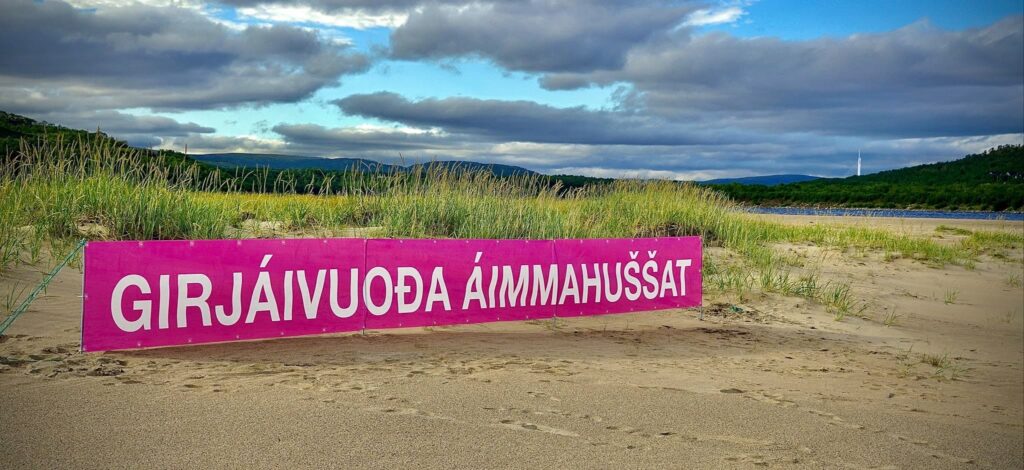
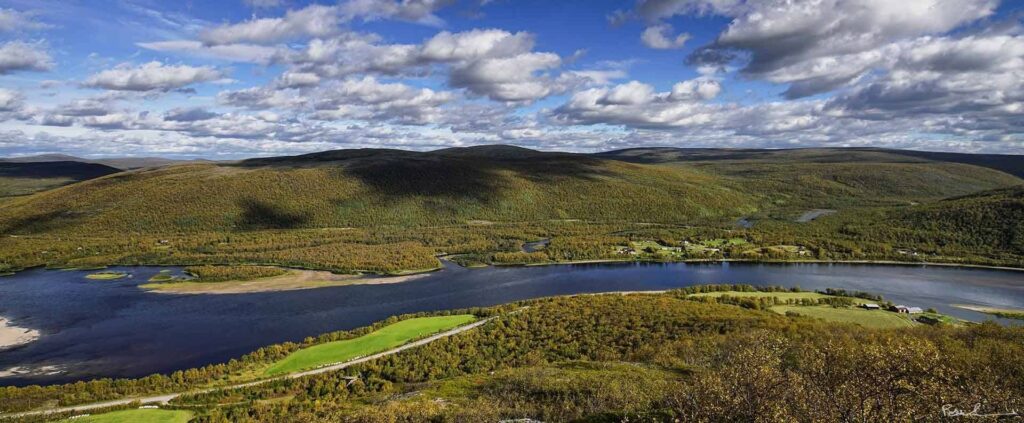
The Deatnu river is one of the most important salmon rivers in Sápmi and a lifeline for Sámi communities in both Norway and Finland. For centuries, it has been a site of traditional knowledge, subsistence fishing, and deep spiritual and cultural connection to wild Atlantic salmon (Salmo salar). In 2027 it will be ten years since the Norwegian and Finnish governments imposed a fishing ban on the Deatnu river. Not coincidentally, 2027 also marks a decade of organising for Ellos Deatnu! (Long Live Deatnu!): an Indigenous-led resistance and self-determination movement launched by Sámi activists along the Deatnu to organise against this law. Sámi identity breathes through traditional livelihoods, customary law, oral traditions, and community health, and all of these cultural identitiarian aspects are deeply tied to the teachings of the land and waters. However, these connections continue to be harmed by climate change, economic profiteering, and resource extraction, the harm being exacerbated by ethnic discrimination, structural violence, outmigration, and attempts at assimilation.
For decades, governments have failed to involve Sámi in land-use decision-making with equity and respect for Sámi Indigenous rights. In turn, this makes Sámi face land-use competition, which prevents them from adapting to a changing climate and harms both human and ecosystem health. Under these conditions, the fishing ban has become an unequivocal site of struggle, a place from which to organise and where community agency can be unleashed. Using the fishing ban as a battleground for community self-determination, the group connects the dots between the rights of the salmon, the river, and the people living along it, facilitating political education spaces and land-based interventions that build Indigenous self-determination in addressing the Deatnu River’s rapidly changing ecosystem and its devastating effects on salmon and river communities.
The Guerrilla Redistribution
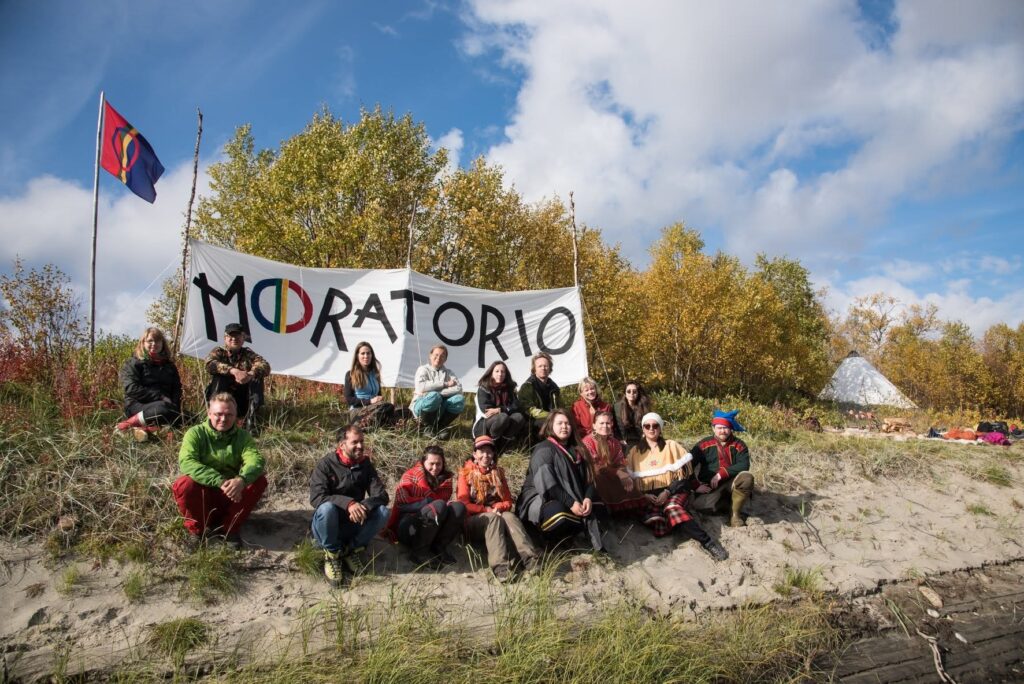
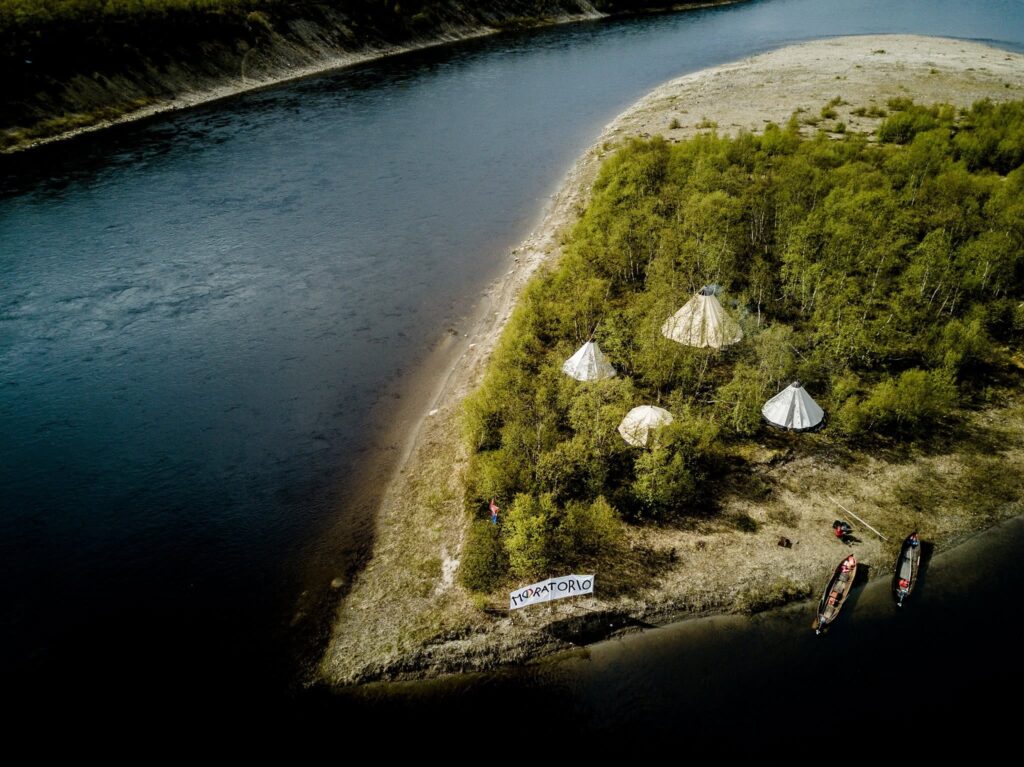
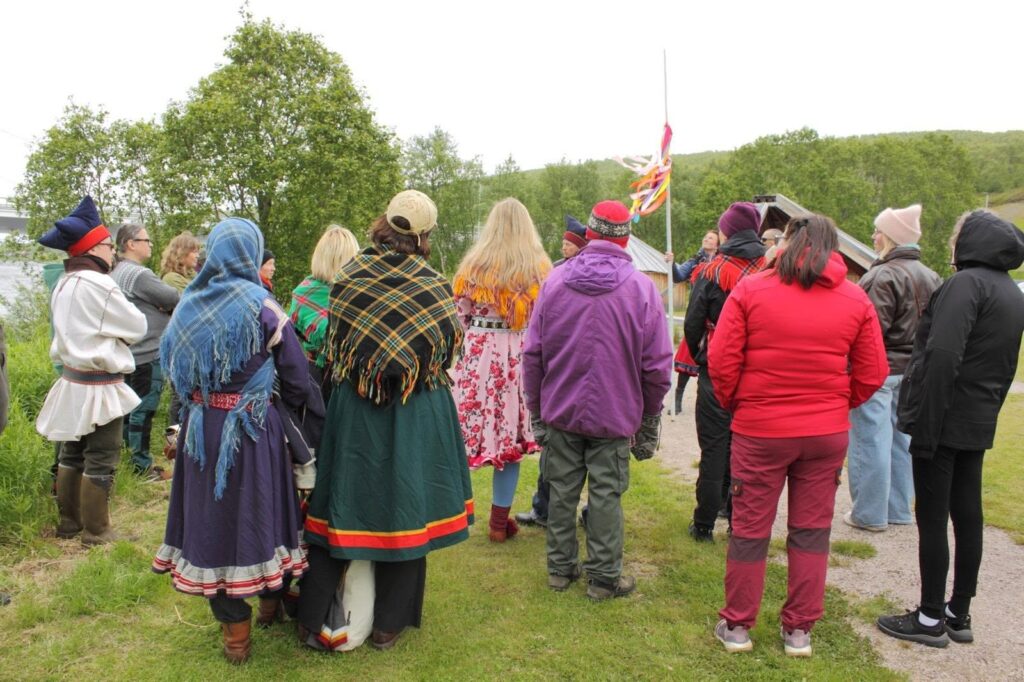
Our funding supported the development of the project Voyage, a series of community-led knowledge-sharing events and direct actions that built on what the group had been developing in previous stages of their work on this issue. Their most prominent action is the moratorium they pushed forward in the island of Čearretsuolu, suspending the enforcement of Deatnu River fishing regulations by claiming them to be in violation of Sámi Indigenous rights. For this precise project stage, they needed money to develop (1) an anti-colonial, autonomous, and communal Sámi art and activism festival in Karasjok; (2) a community art and activism workshop around land stewardship; (3) film screening evenings and discussions across the group’s international Indigenous partner communities, providing space for knowledge exchange and solidarity-building; and (4) community gatherings on the current state of the Deatnu River ecosystem and responses to its declining native salmon and rising pink (humpback) salmon populations.
What is happening in Deatnu reflects a crisis playing out across migrating fisheries worldwide. Ellos Deatnu’s work challenges colonial, government-led approaches to resource management and the voices they exclude, seeking instead to strengthen the self-determination of Sámi, fishing communities, salmon, and the Deatnu itself. Through Voyage, the group facilitates community spaces and site specific actions centred on Indigenous knowledge-sharing and Sámi rights advocacy, bearing witness to a fragile ecosystem at a pivotal moment and asking who holds the power to shape its future. By the next salmon run in 2027, they hope to see the Deatnu River free of the dams blocking migration upstream, defending river, community, and salmon, and documenting this environmental crime for the world.