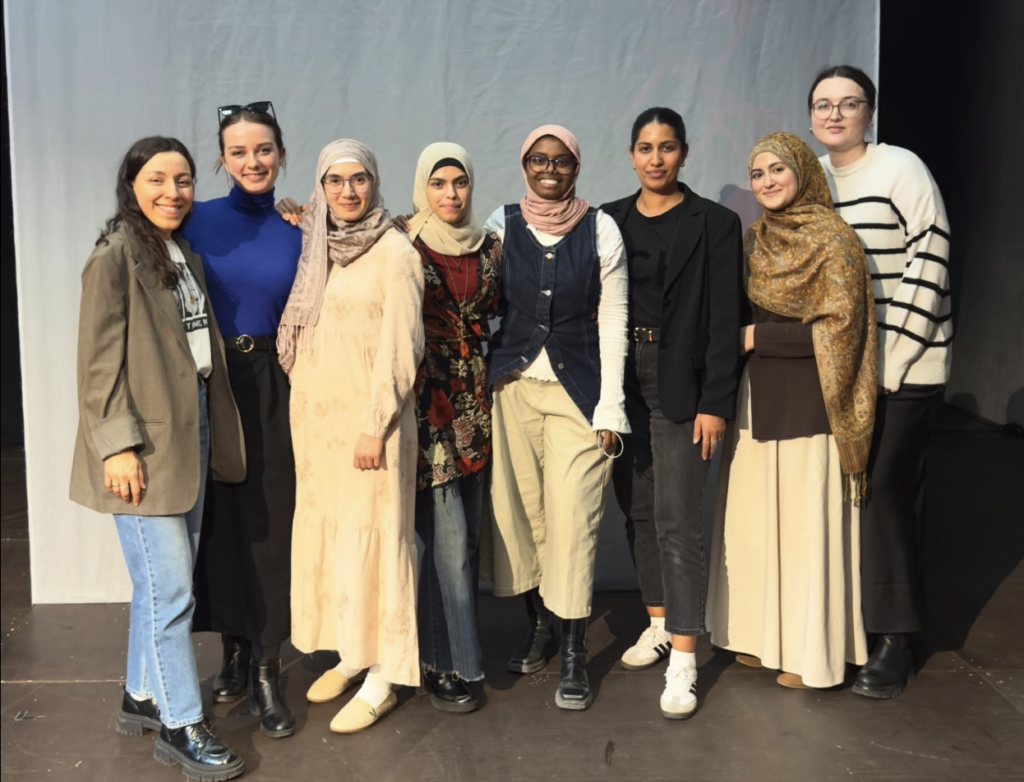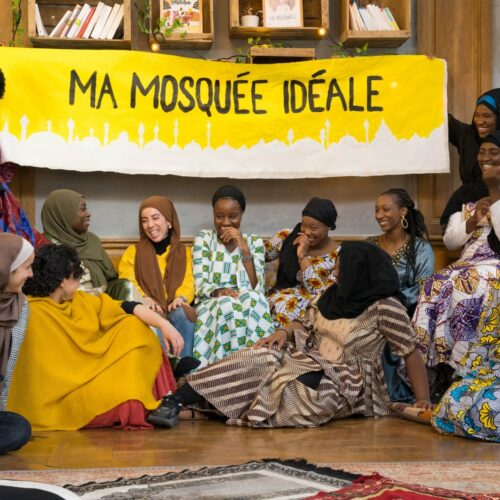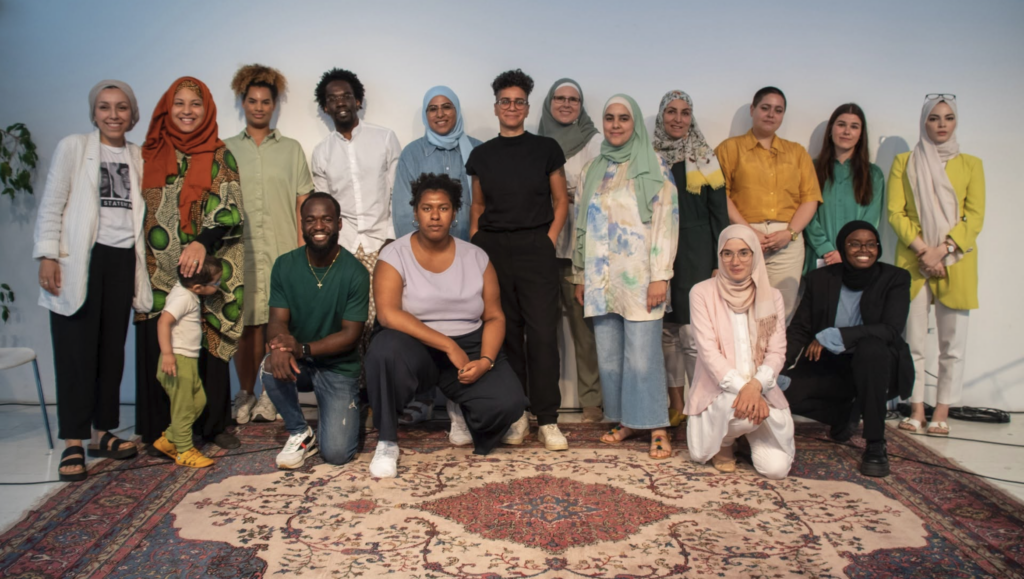
Based in Vienna, Dokustelle Austria is an independent, grassroots reporting and support service that documents anti-Muslim racism and Islamophobia, offering legal and psychosocial counselling to those affected while challenging the state-sanctioned production of knowledge that fuels discriminatory policies. The organisation operates in a context where “Political Islam” has become a deliberately vague and weaponised term, deployed by conservative and right-wing politicians to justify securitisation measures, undercover monitoring of Muslim associations, and raids like Operation Luxor, which mobilised 930 police officers across 70 homes based on a biased study that later collapsed in court. Central to this ecosystem is the state-funded Documentation Centre Political Islam, which produces “scientific” reports and an infamous “Islam Map” that stigmatises over 400 Muslim initiatives, mosques, and civil society organisations. Dokustelle Austria was founded in 2014 by activist powerhouses, growing from volunteer-based documentation to a team of three part-time staff and ten volunteers, all operating with a horizontal, consensus-based structure that rotates positions and resources to ensure democratic decision-making. The organisation is acutely aware of its precarious position: its current funding from the Federal Ministry of Social Affairs is secured only until October 2024, and with upcoming elections threatening to shift power further right, the space for anti-racist knowledge production is shrinking. Dokustelle’s work is rooted in an intersectional, community-led approach, building alliances with BIPoC, LGBTIQ*, and digital rights organisations while maintaining accountability to the very communities it serves, a dynamic that allows for direct critique and collective empowerment from below.

The Guerrilla Redistribution
Our funding goes to a groundbreaking community evaluation and dialogue project that turns the tools of state surveillance back on the state itself. Instead of allowing institutions like the Documentation Centre Political Islam and the Austrian Integration Fund to define Muslim communities from above, the grant enables Dokustelle to convene reading circles where community members, activists, mosque representatives, and affected individuals, critically re-read the studies written about them, assessing their methodology, biases, and real-world impacts. The funding supports the assembly of a focus group of activists, the establishment of five reading groups with ten participants each meeting three times, and the production of an advocacy paper in Turkish, Arabic, German, and English, alongside a “best practice guide” for researchers engaging with communities affected by anti-Muslim racism. Crucially, the grant also covers the advisory board of seasoned scholars and activists, including Farid Hafez, Schirin Amir-Moazami, and Amina Baghajati, who will provide monthly guidance. With a timeframe of eight months, the project aims to produce outputs that will be used to advocate for reducing state funding for the Documentation Centre, while empowering communities to “talk and write back” against epistemic violence and negative media imagery. Success will be measured not by abstract metrics but by the depth of community engagement, the number of participants who feel equipped to counter discriminatory narratives, and the extent to which the advocacy paper resonates across Austrian society and beyond, a vital intervention in a country where the power to define “good” and “bad” Muslims has, for too long, rested in the hands of those who see them only as threats. Since 2024, Dokustelle received fast-track repeat funding in 2025 and 2026.