Here’s a truth that doesn’t make it into many grant reports: revolutions run on relationality. It’s not all manifestos, canvassing, press releases, and perfectly reasoned out theories of change, but the messy, embodied, gloriously inefficient work of people actually being with each other.
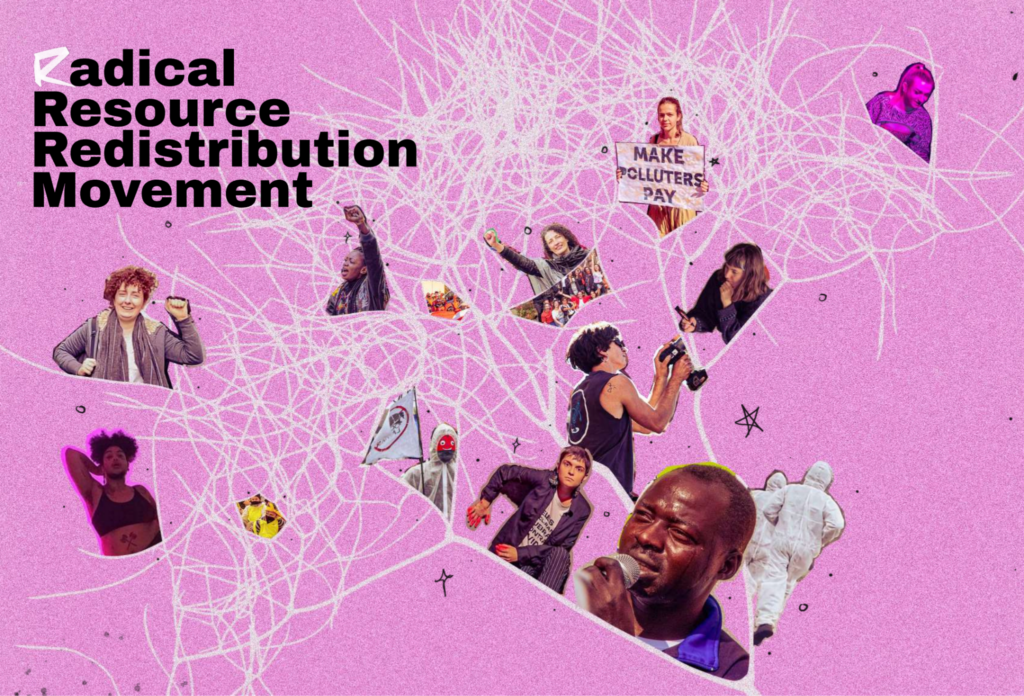
This year, Guerrilla Foundation turns ten. And as we mark a decade of redistribution, we wanted to do something that felt like us: get money out the door to the people who know best what their movements need. So we asked our community a simple question: What event would you organise to celebrate, connect, strategise, or simply deepen relationships in your activist ecosystem?
We had 97 answers. We funded 26. In 2026. Rock n’ roll.
The chosen proposals came from Hungary, Czech Republic, Turkey, Portugal, Poland, Germany, Spain, Lithuania, Netherlands, Italy, Slovenia, Sápmi, Greece. They came from sex worker collectives and trade unions, from community gardens and climate justice groups, from migrant-led organisations and anti-militarisation platforms. They came from people organising for housing rights in Lisbon, workers’ rights in Vilnius, trans liberation in Istanbul, Palestinian solidarity in Warsaw, countercultural power in Ljubljana.
And what united them was this: everyone needed to gather.
The Materiality of Connection
Again, let’s name what usually goes unsaid in philanthropic strategy documents. Relationality requires resources. You cannot build trust over Zoom forever. You cannot coalition-build without train tickets. You cannot dream up non-dystopian futures on an empty stomach while your nervous system is shot from three years of crisis-response organising.
The €5,000 we’re moving isn’t transformational money. This is small money for essential things: a community space rental, childcare so parents can attend, translation so Polish and Palestinian organisers can understand each other, food so a strategy session doesn’t happen on empty stomachs, a DJ so after the hard conversations there’s still room to dance.
Because what we’ve learned watching movements for years is that the political is personal, and the personal requires material conditions. Allyship isn’t a statement of solidarity you post online; it’s showing up, repeatedly, which requires time, which requires covering your basics. Comradeship isn’t an abstraction; it’s staying in the room when the conversation gets hard, which requires nervous systems regulated enough to not flee, which requires rest, which requires resources. Solidarity isn’t a hashtag; it’s the slow work of learning each other’s struggles deeply enough to show up for them, which requires gatherings, which requires funding.
Where can 5,000 EUR Take You?
To give you an idea, because the beauty is in the details, let’s get specific about where we’re redistributing funds. Since some folks are in deep rebel territory, working in acute political opposition, we’re keeping them incognito, but this will give you an idea:
Kolektiv Tadamun (Czechia) will bring together LGBTQI and anti-racist organisers to understand that their struggles are not separate, that queer liberation without racial justice is incomplete, that anti-racism without queer analysis misses how power operates. This is the work of connecting movements that should already be connected.
Kazán Community House (Hungary),will gather housing activists to strategise about how communities can collectively own and control their living spaces. In a country where the state is still hostile and the market is predatory, mutual housing becomes both survival and prefiguration.
Climáximo (Portugal) will gather climate justice organisers to do what the urgency of crisis usually forbids: pause, reflect, and strategise for the long haul. Because the planet can’t wait, but neither can organiser burnout, and burnt-out organisers don’t build movements that last.
The Black Sex Worker Collective (Germany) will create space for Black sex workers to gather without the usual demands to educate, explain, or justify their existence. Just time together, to rest, organise, be.
Gegužės 1-osios profesinė sąjunga (Lithuania) will gather workers in a country where trade union density is among Europe’s lowest, where collective bargaining is rare, where simply meeting as workers to discuss shared grievances is a radical act.
Polish Palestinian Justice Initiative Kaktus will bring together pro-Palestine organisers in a political moment when solidarity with Palestine is increasingly criminalised, when simply naming apartheid can get you cancelled or surveilled. They need each other.
Blackn[è]ss Fest / Blackcoffee ETS (Italy) organising the sixth edition moves from anger to accountability, from resistance to repair. A collective laboratory where Black sex workers and queer organisers build solidarity practices that outlast the festival itself.
Plataforma de Afectados por la Hipoteca (Spain), after sixteen years of stopping evictions and winning housing laws, finally, the party they’ve dreamed of. ReHabitar Fest: live music, collective celebration, and the reminder that housing is a right, not a commodity.
Cultural Centre Magacin (Serbia) is running three days of SHOWBRAVE! 40+ artists, 15+ collectives, one refusal to be invisible. Under systemic cultural repression, they’re celebrating not just survival, but collective endurance.
Embassy Rog (Slovenia) will gather artists and cultural workers to ask what creativity can do in the service of liberation, not just commerce. Because we need imagination as much as we need strategy.
Skogsupproret (Sápmi/Sweden) are hitting remote dirt tracks to meet reindeer herders across Sápmi, multiple trips, multiple villages, one demand: long-term strategy against the forestry giant SCA. Because solidarity with Indigenous struggles means showing up when and where you’re needed.
Maruf Foundation (Netherlands) will bring together communities facing Islamophobia and transphobia, two forms of violence that the far right weaponises together, and that therefore require resistance together.
School of Public Life / Közélet Iskolája (Hungary) are orchestrating two days of learning, connection, and strategy after the high-stakes 2026 elections. Communal meals and shared workshops, because joy is a deliberate choice in the post-Orbán reality.
No Name Kitchen (Balkan borders) will pull together the Just a Transformation Summit to strengthen their collective spine, burnout prevention, trauma-informed activism, and radical strategy redesign. An investment in not falling apart. #NotaRetreat.
Porco Rosso (Italy) will bring together migrant justice organisers from Africa and Eastern Europe, two regions whose migrants are pitted against each other by European border regimes. The work is to refuse that division, to build solidarity across the very lines the system draws to keep us apart.
Trans+ Pride Istanbul (Turkey), when twenty trans participants, three days, two nights, outside Istanbul gather. No allies, no spectators, just shared presence & the slow work of building trans-led collective power across cities.
Why This Matters Now
We’re writing this in 2026. The far right is surging across Europe. The climate is unraveling. Inequality is grotesque. The institutions that were supposed to protect us, parliaments, courts, media, are either complicit or impotent. In this context, the temptation is to double down on “serious” work: the policy briefs, the legal challenges, the parliamentary lobbying.
But here’s the thing: the policy briefs won’t save us if we don’t have movements strong enough to demand implementation. The legal challenges won’t matter if there’s no base to defend the wins. The lobbying won’t work if politicians know there’s no organised constituency behind our demands.
Movements are built by people. People who know each other. People who trust each other. People who’ve eaten together, argued together, cried together, danced together. People who’ve sat in a room and asked not just “what’s the strategy?” but “how are you doing, really?” People who’ve learned each other’s histories enough to show up when it’s not their struggle… yet.
This is what we mean by allyship, comradeship, and solidarity built on relationality. Not a transaction: I’ll support your thing if you support mine. Not a performance: look at me standing with the oppressed. But the slow, unglamorous, absolutely indispensable work of becoming people who can be counted on, which requires knowing each other, which requires being together, which requires resources to make that togetherness possible.
The research is clear: activist burnout isn’t primarily about working too many hours. It’s about working without connection, without joy, without the sense that you’re part of something larger than your own inbox. It’s about isolation in the face of impossible odds. Gatherings are antidotes to burnout. Not retreats that pretend the struggle doesn’t exist, but spaces where the struggle can be named, shared, held collectively. Where one organiser’s despair meets another’s hope and something new emerges. Where strategy gets workshopped and tested and improved. Where the vision gets rekindled.
Because here’s the other thing: imagination is collective. The most brilliant organiser alone cannot dream a world into being. New futures emerge in conversation, in friction, in the space between people who see things differently but refuse to give up on each other. That requires gathering. That requires time. That requires resources.
Redistribits and the Long Haul
We’ve taken to calling this funding redistribits, a playful nod to what they are: small redistributions that create space for the rest. Not the whole struggle, but the conditions for it. Not the solution, but the soil.
To the groups we couldn’t fund: we see you. We know the need runs deeper than our budget. Every application was a reminder of how much organising is happening, how much connection is needed, how many gatherings are waiting to happen.
Ten years in, here’s what we know: movements are made in the spaces between campaigns. In the kitchen after the meeting. In the park during the strategy break. In the community centre when someone finally says what everyone was thinking. On the dance floor when the DJ drops the right track and for a moment, the future doesn’t feel so far away.
That’s what we’re creating material conditions for. Not events. Possibilities.