How to Engage with Family in Political Discourse Without (or with Minimal) Bloodshed

The family holiday gathering. For many, a festival of forced cheer, a theatre of the absurd where the props are tinsel and a roasted bird, and the stage directions are dictated by the ghost of indoctrination past. It is a peculiar cultural ritual, this voluntary immersion in a confrontation with blood attachments and political antipathies. To speak of politics here is to perform a high-wire act over a simmering pit of long-built-up resentments. The goal is never victory, a childish and ultimately totalitarian fantasy, but survival with one’s dignity and digestive tract intact. This requires a strategy, a form of intellectual aikido that redirects the aggressive energy of the dinner table debate into something a little less lethal.
We at Guerrilla Foundation are transclassist coalition builders, and we hold relationship tending in the highest regard when it comes to coalition-building, while acknowledging that members within our coalition have extremely different familial contexts, some grassroots activist organisers, some heirs to immense fortunes and others exist inside the provincial pressures of the European middle class. The following is a survival guide for the holidays lest they escalate into savagery, it walks the line between tried-and-tested tricks at keeping one’s cool or making use of this tradition-forced encounter for intellectuoemotional bridging. Best of luck and bottoms up.

I. The Activist’s Pilgrimage: From the Picket Line to the Dinner Line
You, the bearer of a conscience forged in the fires of social justice, return to the ancestral hotseat. Your family members might not be Fox News caricatures, DailyMail readers, or AfD donors, but they might be alt-right-adjacent. Your instinct, the activist’s honed reflex, is to educate, to dismantle, to convert. Suppress it. The holiday dinner is not a rally; it is a field of emotional landmines.
The Art of Compassionate Listening as Strategic Intelligence: Before you can be heard, you must perform the act of hearing. This is not passive acquiescence but an active, almost anthropological, exercise. When Uncle Roger launches into his treatise on “woke culture,” listen not to the content, which may be intellectually barren, but to the underlying grammar of fear. He is not speaking of ideology, but of a world whose moral coordinates are shifting, leaving him disoriented. Your task is to identify the sensation beneath the statement, the anxiety over change, the fear of obsolescence, of being left behind. This is not about agreeing; it is about diagnosing the emotional infection so you can apply the correct salve, not just pour rhetorical salt onto the wound.
Finding Common Ground in the Ruins: The bridge between your worldviews is not built on the grand arches of policy, but on the fragile footpaths of shared sentiment. He fears the erosion of “community”? You lament the loss of social solidarity. He values “hard work”? You champion the dignity of labour. The language is different, but the emotional roots are similar. Your goal is to be a translator, not a traitor to your cause. Try saying, “It sounds like we both want a world where people feel secure and valued for their contributions.” This is not a concession; it is a tactical maneuver that places you on the same side of the table, staring at the problem together, rather than at each other as the problem. (In general, always worth asking, how do you get to the same side of the table with someone in opposition? Is it possible?..)
Inoculation Through Synthesis: The most powerful retort is not a rebuttal, but a refinement. When confronted with a hyperbolic claim, do not deny its premise outright. Absorb it, reframe it, and return it in a more palatable, synthesized form. For example:
The Provocation: “You people just want to hand out free money to everyone who doesn’t want to work!”
The Inoculation: “That’s a real concern about creating dependency. I see it differently, however. I think of a strong social safety net less as a ‘handout’ and more as a ‘trampoline’, it’s there to bounce people back into the economy when they fall, which is good for everyone’s bottom line. Cos anyone can fall. It’s about creating stability (with some morals), not stagnation.”
You have not agreed, but you have shifted the metaphor from one of laziness to one of resilience and economic pragmatism. You have spoken his language while smuggling in your own ideology.
II. The Prodigal Heir: On Challenging the Dynastic Hoard
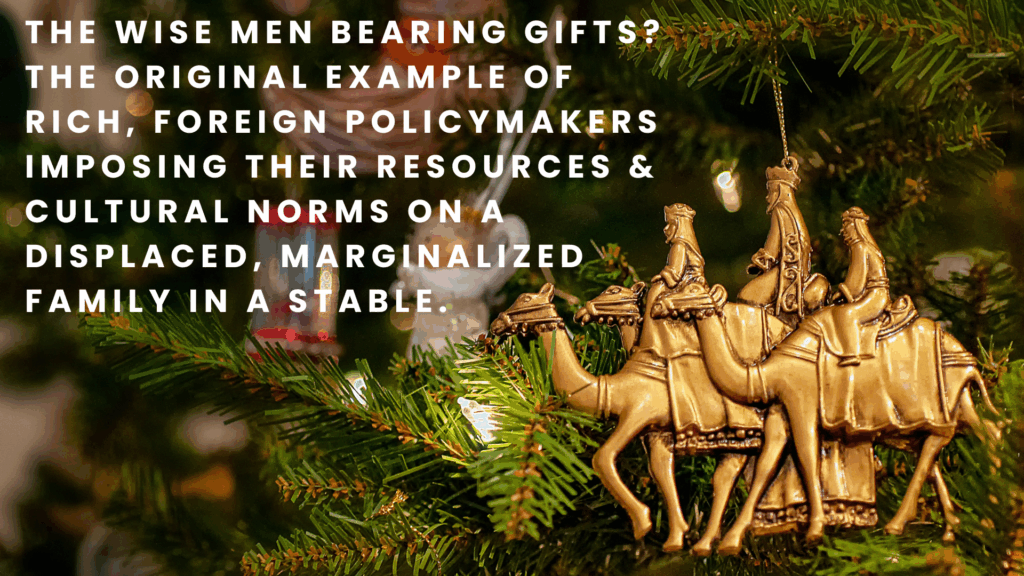
Your particular battleground is not merely ideological, but material. You are the black sheep whose fleece has been dyed with the colours of wealth redistribution, gazing upon the gilded pasture your family calls an estate. To speak of dismantling dynastic wealth at the dinner table it built is at best an act of dramatic irony, at worst, utter class betrayal. The key here is to lure, not to bludgeon.
Conversation Starters That Don’t Start Fires: Avoid the language of accusation (“hoarding,” “greed”). Instead, appeal to deeper, often unspoken, values: legacy, wisdom, and freedom.
The Legacy Lure: “I’ve been thinking a lot about what makes a lasting legacy. It seems to me that great families are remembered not just for the wealth they accumulated, but for the problems they solved. I’m fascinated by models where private wealth can be leveraged to create public good, ensuring the family name is associated with innovation and generosity for generations.”
The Wisdom Play: “You’ve all been so successful at building this. I’m curious, with all your experience, what do you see as the bigger responsibility that comes with this kind of resources? I’m trying to learn from you about the next chapter, not just of preserving wealth, but of deploying it meaningfully.”
The Freedom Pitch: “It’s interesting, I’ve been reading about how immense wealth can sometimes become a cage, creating anxiety for the next generation. I wonder if there’s a way to structure things that ensures financial security but also gives everyone the freedom to find their own purpose, without being solely defined by or burdened by a vast fortune.”
You are not attacking the fortress; you are asking for a tour of the blueprints and subtly pointing out the structural flaws, all while complimenting and not antagonizing the architects.

III. For the Rest of Us: A Survival Guide for the Triggered
For those who are not ideologues but are simply, utterly, activated by the sheer superficiality or mercantile politics on display, your mission is different: evasion with elegance. Your tools are deflection, absurdity, and the strategic deployment of pastry.
The Art of the Absurdist Pivot: When cousin Karen begins a sentence with, “The economy is just like a household budget…”, cut in with wide-eyed enthusiasm. “Speaking of households, have you seen the documentary about the competitive world of professional tidying? It’s a thriller! The drama of a perfectly folded sock!” The goal is to derail the train of thought with a non-sequitur so charmingly bizarre that all anyone can do is blink and move on from the Karenisms.
The Gourmet Distraction: Arm yourself with one (1) utterly irresistible food item, a perfect Bûche de Noël, a sublime cheese. When political temperatures rise, intervene physically. “I simply cannot let this conversation continue until everyone has tried a slice of this log. It’s a religious experience.” You become a culinary saviour, a purveyor of pleasure in the face of potential pain.
The Compassionate Exit: Sometimes, the only winning move is to not play. Have a pre-rehearsed, polite exit strategy. “This is such a complex topic, and I find my bandwidth for complex topics is maxed out by the tryptophan (from the cheese previously used). Please excuse me, I must go and aggressively admire the landscaping.” You acknowledge, you disengage, you flee to the sanctity of the shrubbery or cityscape. Self-preservation is an essential form of self-care, fewer gastric ulcers means more gusto to engage in complex political dialogue, when you’re less cornered by obligation.

Outro: A Toast to the Aftermath
And so, as the last ornament is packed away and the psychic scars begin to fade from crimson to a dull, manageable pink, we can reflect. We did not solve the climate crisis or late-stage capitalism from the IKEA extension table. But if we managed to pass the peas without passing judgment, to listen without launching a counter-offensive, to defend our ideals without deploying emotional scorched-earth tactics, then we have achieved a minor miracle. We have navigated the Holislays not as culture warriors, but as diplomats of the domestic, arbiters of the awkward, and survivors of the dogmatic stuffings. Until next year, swap your approaches to the family holiday fiascos with friends and fortify your spirits, as well as your weaponised cheese boards, accordingly.
Time to put the polar into anti-polarization.